{x_post_terms_list}

News

What Stood Out at IIEX North America: From AI Maturity to Industry Trust

IIEX North America felt like a useful reflection of where the insights industry is now. 

Not where it was a year or two ago, when much of the conversation was still centered on possibility, experimentation, and the novelty of new tools. And not in the early wave of AI discussion, when the loudest question was often what the technology might eventually be able to do. 

The conversation has moved on. The industry is no longer just talking about innovation – it’s putting it into action. 

That was the clearest thread running through the event. Whether the focus was new technology, AI-enabled workflows, or evolving research methods, the emphasis was less on theory and more on application. The tone felt more practical, more grounded, and in many cases, more mature. 

Two themes stood out in particular: maturity and trust. 
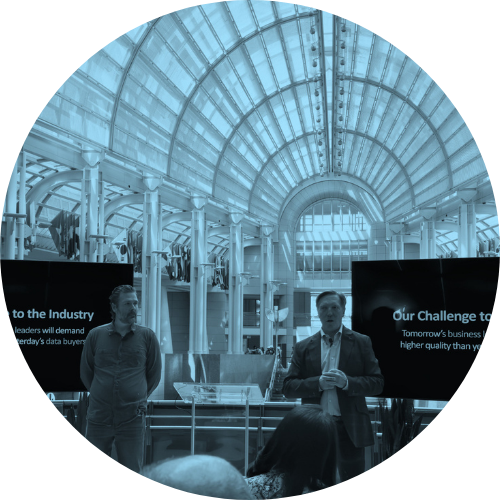
The AI Conversation Is Maturing


A big takeaway from Day 1 was how much the conversation around AI has evolved. 

Partners and technology providers are moving away from isolated use cases and one-off features towards more connected, AI-driven ecosystems. That shift matters, suggesting the market is moving beyond asking whether AI has a role in insights, and starting to focus more on how it fits into the wider workflow in a way that is genuinely useful. 

The sophistication of the tools on show made that clear. This is no longer just about automating a single task or speeding up one step in the process. More of the conversation is now about how different parts of the research and insights workflow connect, where friction can be removed, and how teams can get from question to answer more efficiently. 

That does not mean the hard work is done. It means the market is entering a different phase. A more mature phase is not defined by bigger claims, but by better integration, clearer use cases, and more realistic conversations about where the value actually sits. 

The strongest conversations were around how to improve speed without losing rigor, how to reduce friction without creating new risks, and how to make insights more usable across the business. 

Trust May Now Be the Bigger Challenge


If Day 1 was about maturity, Day 2 was more about trust. 

The industry has made real progress in building end-to-end AI solutions that remove many of the friction points that used to slow everything down. In many ways, the technology is moving faster than the conversation around adoption. 

That’s why some of the most important discussions were not really about the technology itself. They were about what comes next: getting clients, stakeholders, and decision-makers to believe in the outputs enough to act on them. 

Speed and efficiency are valuable. But they are not enough on their own. If the people buying, using, and relying on these systems do not have confidence in the data, the process, or the outcome, then the benefits quickly start to weaken. 

As AI becomes more embedded across the research lifecycle, trust becomes less of a side issue and more of a central one. That trust will not come from bold positioning alone. It will need to be earned through transparency, consistency, proof, and a clearer understanding of how outputs are generated and where human judgment still matters. That feels like one of the biggest priorities ahead for the industry. 

The Industry Is Shifting from Talking to Doing


One of the most encouraging things about IIEX was that the conversation did not feel stuck in “what if” mode. There was a sense that insight professionals are no longer simply discussing how research could be improved. More of them are actively changing how they work. 

That came through in the way people talked about AI, automation, and newer research methods. The focus was less on big transformation statements and more on practical use: where these tools fit, what they make easier, and how they can help teams move faster without losing confidence in the work. 

The question is no longer just what is possible. It is what is working, what is scalable, and what teams can use with confidence. 

That is a healthier place for the industry to be, moving the conversation away from surface-level innovation and closer to the things that really matter: quality, usability, governance, business impact, and whether the work actually helps people make better decisions.

What This Means for Insight Teams


For insight teams, the opportunity is not just to adopt new tools, but to build a better system around how data is collected, interpreted, and used. One that is fast enough for real business decisions, but robust enough that people trust what they are seeing. 

That means the bar is getting higher. Insight functions will increasingly be judged not just on whether they are experimenting with new technologies, but on whether they can turn those technologies into something dependable, actionable, and commercially useful. 

In practice, that means balancing a few things at once: 

  • speed and confidence 
  • automation and oversight 
  • efficiency and transparency 
  • innovation and trust 

The teams that do this well will be the ones that move beyond isolated wins and create a more reliable connection between measurement and action. 

Final Thoughts


IIEX North America showed an industry that is moving forward. The most interesting part is not that AI is everywhere, but that the conversation around it is becoming more disciplined. 

There’s more focus now on how these tools fit together, how they work in practice, and how to make them credible enough for real decision-making. The future of insights will not be shaped by innovation alone. It will be shaped by whether the industry can turn innovation into something people trust and use. 

Join our Newsletter