Blog

Blog

Blog

Breathing With Both Lungs: How Coca-Cola Balances Technology and Research to Build Smarter Marketing

When people talk about modern marketing, they often fall into one of two categories. Some believe technology will solve everything: faster data, better automation, more models, more dashboards. Others argue that no amount of technology can replace deep consumer understanding and the fundamentals of good research. 

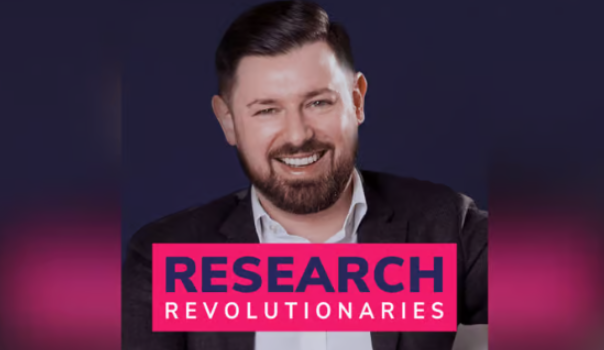
Speaking on the Research Revolutionaries podcast with JT Turner, founder and CEO of DelineateGreg Pharo sees it differently. As Global Senior Director of Communications and Marketing Effectiveness at The Coca-Cola Company, he has spent his career working across analytics, research, media optimization, copy testing, and forecasting. He has seen the rise of big data, the arrival of advanced analytics, and the early applications of artificial intelligence inside the world’s most recognized beverage company. 

Through that experience, Greg has arrived at one simple conclusion. “You have to breathe with both lungs.” 

Technology on its own is not enough. Research expertise on its own is not enough. The real power comes from treating both as essential parts of the same system. 

Let’s break down how Coca-Cola applies the principle in practice, and what other organizations can learn as they modernize their own insights and analytics capabilities. 

You can watch or listen to the full podcast episode here: https://www.research-revolutionaries.com/4-21st-century-research-how-coca-cola-moved-to-real-time-campaign-tracking/  
Screenshot 2025 12 01 161010

The Two Lungs of Modern Insight


When JT asks Greg whether technology or research rigor matters more when choosing partners, Greg refuses to pick a side. 

“I am a greedy client,” he says. “So I am going to say both are important. It is a yes and. You have to breathe with both lungs.” 

For Greg, one lung represents technology and analytics. The other represents consumer understanding, research design, and the human skills behind interpretation. Each lung does something different, but neither can function well without the other. 

Technology gives speed, scale, and access 

Greg explains that everything in the business and in culture is moving faster. Marketing cycles are shorter. Campaigns change more often. Messages compete in a crowded environment. Teams need data at a pace that traditional methods alone cannot deliver. 

Technology gives the system power. It allows teams to combine data sources, run analytics at speed, automate repeatable work, and bring insight to more people. 

Without technology, insight stays slow and locked behind specialists. 

Research gives depth, clarity, and meaning 

At the same time, Greg is clear that technology cannot replace the fundamentals of consumer understanding. 

“Even the best technology company out there is not going to be able to get very far unless they have a deep and innate sense of understanding consumers.” 

AI models, predictive analytics, and dashboards still rely on strong research thinking. Someone has to ask the right question, design the right measurement, interpret the results, and translate complex patterns into ideas a marketing team can use. 

Without research craft, technology produces noise instead of clarity. 

Modern organizations need both 

For Greg, the healthiest insight functions treat technology and research as equal partners. Technology extends what research can do. Research grounds what technology produces. 

The organizations that struggle are often the ones that treat these capabilities as separate instead of combined. 

What Embracing Technology Means in Practice


Coca-Cola’s embrace of technology is not new. Greg explains that the company began experimenting with AI techniques about twenty years ago through its marketing mixdeling work. More recently, Coca-Cola has used AI to assess creative performance, diagnose messaging, and even co-develop new tools for virtual copy testing. 

Greg describes the company’s relationship with technology as a “big old bear hug.” There are several reasons behind that mindset. 

  1. The need for speed 

Greg is open about how slow things used to be. Early in his career, he remembers a simple market share update taking two weeks. He rewrote the process himself and brought it down to under two hours. 

That experience stayed with him. At Coca-Cola today, the same logic applies. Long research cycles and delayed insights do not fit the pace of modern marketing. “The need for speed” is one of the company’s biggest drivers of technology adoption. 

      2. The explosion of clutter 

Greg points out that consumers receive more messages than ever before. There are more brands, more formats, more touchpoints, and more digital signals. Technology helps teams understand how people move through that environment and how different channels work together. 

Without analytics, it becomes impossible to see across the noise. 

      3. The ability to combine data 

Technology makes it possible to merge data from different sources. That includes digital signals, research responses, media exposure, retail activity, and experimentation. Bringing these together creates a much more complete view of performance. 

Greg emphasizes that when he started in the industry, these connections were difficult or impossible. Today, the expectation is to make them happen. 

     4. The potential for new creative possibilities 

Coca-Cola has worked with OpenAI on generative creative experiments, and the company is applying AI inside Studio X, its creative development partnership with WPP. Greg says these tools can help work move “faster,” “deeper,” and produce “wickedly insightful information.” 

For a company with hundreds of campaigns across markets, that level of leverage matters. 

Why Technology Alone Is Not Enough


Even with Coca-Cola’s strong embrace of technology, Greg repeatedly returns to the point that research fundamentals cannot be ignored. “There is still a need for good human understanding,” he says. “That is absolutely table stakes.” 

Greg explains that technology should amplify good thinking, not replace it. Teams still have to understand audiences, segmentations, and human behavior. They still need to know how to design a survey, structure a test, or interpret qualitative insight. 

AI can summarize patterns or predict performance, but it cannot interpret cultural nuance or understand brand strategy. Greg wants both the math and the meaning. The partnership between analytics and human judgment is what produces useful insight. 

Another reason research thinking matters is precision. Greg notes that AI introduces new questions about accuracy. There is a balance between speed and precision, and teams need to understand where that line sits. 

Technology can increase speed, but without safeguards it can also introduce risk. Research rigor keeps the system grounded. 

Greg believes in testing, learning, and “fast failing.” That requires research discipline. Teams need to design experiments well, understand the limits of their data, and know when to trust or challenge an output. 

In other words, technology widens what is possible, but research makes sure what is possible is still useful. 

How Coca-Cola Brings the Two Together


One of the most interesting parts of the discussion is how Coca-Cola organizes itself. Greg makes the point that his team is not a standalone research group. It is part of a much broader networked model. 

Coca-Cola connects people across: 

  • Analytics and reporting 
  • Human insights and consumer research 
  • Integrated marketing experiences 
  • Media 
  • Technology enablers 
  • Global brand teams 
  • Bottling partners 

This creates a system where technology, data, research, creative, and media are all part of the same conversation. 

Greg describes this as “a matter of orchestration.” Each function brings something different, and the value comes from coordinating them, not isolating them. 

For many organizations, this is the real lesson: research and technology work best when the teams that use them work together. 

Simple Lessons Other Brands Can Apply


Most organizations will not have Coca-Cola’s scale or its global network, but the principles behind Greg’s “both lungs” approach apply everywhere. 

  • Treat technology as an enabler, not the solution: Tools alone will not fix slow decision-making or low insight adoption. Technology needs to be paired with a clear understanding of what business questions matter, what decisions need to be made, and how teams work. 
  • Keep research fundamentals at the core: Human understanding, segmentation, good survey and testing design, and clear interpretation all remain critical. Technology cannot replace these things. It only enhances them. 
  • Build cross-functional teams, not silos: Coca-Cola’s model shows that insight becomes more valuable when it is shared across analytics, media, creative, and research. Small organizations can replicate this with cross-functional squads and shared dashboards. 
  • Balance speed with precision: Every team needs to determine which insights need to be instant and which require deeper work. Technology can accelerate both, but the judgment of where each belongs comes from research thinking. 
  • Let AI extend human capability: Greg’s examples of AI in mix modeling, virtual copy testing, and creative analysis show how AI can make work faster and deeper. But the strongest results come when AI outputs are combined with human interpretation and consumer feedback. 

Delineate is built on the same principle Greg describes. Brands need both the technology that accelerates access to insight and the research discipline that keeps it meaningful. 

Delineate’s real-time brand and campaign tracking blends live data with strong quality controls and simple, decision-ready frameworks. It gives teams a way to act quickly while staying grounded in solid research design. 

For organizations that want technology that does more than generate dashboards, this combination is essential.

Breathing With Both Lungs


Greg’s “both lungs” idea captures something simple and powerful. Modern insight is not a choice between technology and research. It is the combination of both that creates real value. 

Technology brings speed, scale, and new creative possibilities. Research brings clarity, meaning, and discipline. Together, they help marketing teams navigate complexity with confidence. The goal is not to automate everything or to rely on instincts alone, but to build systems where human understanding and advanced analytics lift each other up. 

Want to bring this balance into your own organization? 

Delineate gives brands real-time, decision-ready insight grounded in strong research practice. If you want faster answers without giving up rigor, we can help. 

Listen to the full conversation with Greg Pharo on Research Revolutionaries: https://www.research-revolutionaries.com/4-21st-century-research-how-coca-cola-moved-to-real-time-campaign-tracking/  

Join our Newsletter