News

News

AI, Trust and Brand Tracking at the Future of Insights Summit

What Delineate heard at the 2026 Future of Insights Summit, from AI and synthetic respondents to brand tracking frustrations and changing levels of trust in LLMs. 

In conversations with brands over two days in Athens, the same frustration kept coming up. They were spending significant amounts on brand tracking and getting numbers back, but not enough they could use in strategic decisions. 

Some were questioning measures that had been in their trackers for years. Others wanted more depth from the data. With budgets under pressure, changing the tracker was starting to move higher up the list. 

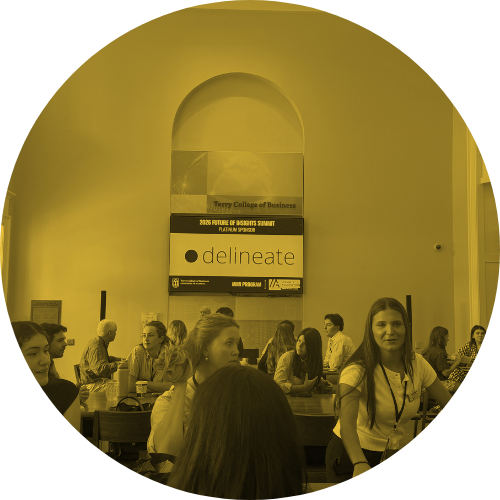
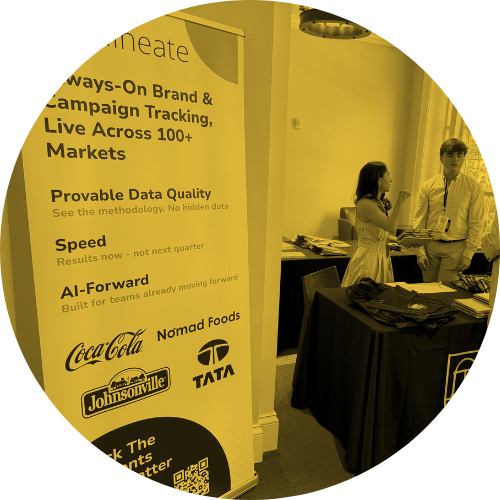
But the conversations around tracking were only one thread running through the two days at the Future of Insights Summit. Held at the University of Georgia, the event brought together brands, agencies, researchers and students from UGA’s Master of Marketing Research program to discuss where the profession is heading, with Delineate attending as a Platinum Sponsor. 
 

2 36    1 34   3 35

How much should researchers hand over to AI?


AI dominated much of the agenda, but common ground was harder to find. 

Some saw AI and synthetic data as an inevitable part of research and argued that the profession needed to adapt quickly. Others placed more weight on human-led methods and on making the approaches already available more useful. A few rejected AI and synthetic data altogether. 

Pressure was also coming from outside the research function. We heard examples of leadership teams setting the adoption of AI or LLMs as an objective for the year. For researchers, that leaves a more difficult question: where should they be used? 

Several sessions approached it from different angles. Amir Kapadia of Shapiro + Raj, who opened the second day with The End of the Researcher. The Rise of the Renaissance Consultant, argued that researchers should identify the parts of their day-to-day work that can be handed over to AI, freeing up more time for work connected directly to business outcomes. 

Microsoft showed what that can look like in practice, describing an internal approach that separates work according to the role AI plays in it: AI-driven, AI-assisted and human-led. 

Previous qualitative research, for example, can be used to help teams reach an initial direction for marketing messages more quickly. The recommendation produced is not treated as the answer. It gives marketing and brand teams a starting point, which is then questioned, tested, and refined. 

One detail that caught our attention was that tracking remained firmly in the human-led category. Microsoft was not ready to move that work to fully AI-generated or synthetic respondents. For tracking, there was still value in speaking to real people and in knowing that the answers came from them. 

The synthetic panel question


That became more contentious during Brian Lamar of ROI Rocket’s session on what online sampling might look like in five years. 

Lamar argued that panels have become increasingly similar, often drawing on the same methods and respondent pools. His view of what comes next included synthetic respondents, trained to behave like real people and used alongside live panelists. 

Our team argued that if a synthetic respondent is modeled on the people already represented in the panel, what is it adding? 

The concern was that the synthetic portion could increase the number of responses without increasing the range of perspectives behind them. If they are designed to reproduce patterns already present in the panel, the result may be more data, but not necessarily more information. 

Not all in the room agreed, but the exchange helped capture a question that surfaced repeatedly across the event: where does synthetic data genuinely extend what researchers can learn, and where does it simply reproduce what they already have? 

A different argument about brand growth


Christopher Brace of Story Legacy gave us another opportunity to challenge an idea directly. 

His session focused on mental associations and message resonance as a route to brand growth, an approach that differs from the Ehrenberg-Bass principles that shape much of how Delineate approaches brand growth. So, we asked him where the two approaches diverged. 

The discussion was less about proving one school of thought right and the other wrong than it was about where each could help a brand. There was disagreement on aspects of the methodology, but common ground around the purpose of the work itself: growth has to remain central. 

That applies to the insights function too. Research has to give the business something it can act on. When it becomes disconnected from growth and decision-making, its position inside the organization becomes much harder to defend. 

Research has heard the word “dead” before


One of the more memorable sessions came from James Forr of Olson Zaltman, who approached the future of research through the history of entertainment. 

When radio arrived, live entertainment was supposed to be finished. It was not, although its role changed. Television later prompted predictions about the death of radio. Radio survived too, adapting as new formats emerged. 

Streaming brought the same kind of certainty about linear television. Again, the reality was more complicated. Broadcasters adapted, and streaming became another part of the media landscape rather than a simple replacement for what came before. 

Forr used that history to put some of the current predictions about market research into perspective. 

The work may change substantially. Some familiar tasks may disappear, while others move to technology. But that is different from saying the researcher disappears with them. 

For a room that included both experienced researchers and students preparing to enter the profession, it was a useful way to frame the debate. 

The more interesting question becomes what the next version of the researcher’s job looks like. 


The tracker conversations kept coming back


Away from the stage, a more immediate issue kept surfacing. 

The brands we spoke with were questioning whether their trackers were giving them enough depth to support strategic decisions. They had the numbers, and in many cases could see whether the brand looked healthy against familiar measures. The harder part was understanding what sat behind those numbers. 

Why had something changed? What should the team do next? Was the metric still useful at all? 

Some measures had remained in place simply because they had always been part of the tracker, even when the current team was no longer completely clear on why they were there. 

That becomes harder to justify when research budgets are tight. If a large share of the budget is already tied up in tracking, but the team still needs additional research to answer an important business question, the tracker itself starts to come under scrutiny. 

There was a useful connection here with Microsoft’s session. Its team was keeping tracking human-led because it still valued responses from real people. The brands we spoke with were not arguing against that. Their frustration was more basic: the research they were already paying for was not giving them enough to work with. 

Real respondents matter. But so does whether the data gives the business enough depth to make a decision. 

Different generations, different levels of trust


One difference was especially noticeable across the two days: students and more experienced researchers seemed to be approaching AI from very different starting points. 

The UGA MMR students appeared comfortable using LLMs with research data. They’d use the technology to identify themes or make an initial pass through the work, but their training also required them to question the output and check whether the result made sense, not simply taking the LLM at its word. 

Researchers who had spent longer in the profession were generally more cautious. We heard the practical objection that loading thousands of rows into an LLM, waiting for the analysis and then checking the output carefully enough to trust it could sometimes take as much effort as doing the work themselves. 

That doesn’t necessarily make one group more or less trusting than the other. It suggests they are developing different instincts around where the technology is useful, and how much verification it still requires. 

For us, the conversations in Athens brought the discussion back to whether research is giving teams what they need to make a decision. That is particularly relevant to brand tracking. Most teams are not short of numbers. The harder part is having enough depth to understand what has changed, why it has changed, and what to do next, with enough confidence in the data to act on it. 

If your current tracker is no longer giving you that, talk to the Delineate team. 

Join our Newsletter