Blog

Blog

10 Questions to Ask Before You Buy a Brand Tracking Solution

Most brand tracker evaluations focus on the parts that are easy to inspect. Buyers scrutinize sample composition, metric definitions, question wording, and weighting. All of it matters, but none of it tells you whether the tracker will still be earning its place in two years. 

The trackers that fail aren’t usually the ones that failed a methodology review. They fail because the data arrives too slowly to shape a live decision, or it lands in a format nobody outside the insights team can use. Some fail more quietly. The number moves, a CMO asks why in a planning meeting, and nobody in the room can answer. A tracker only creates value when people act on it, and most of what drives that sits outside the methodology document. 

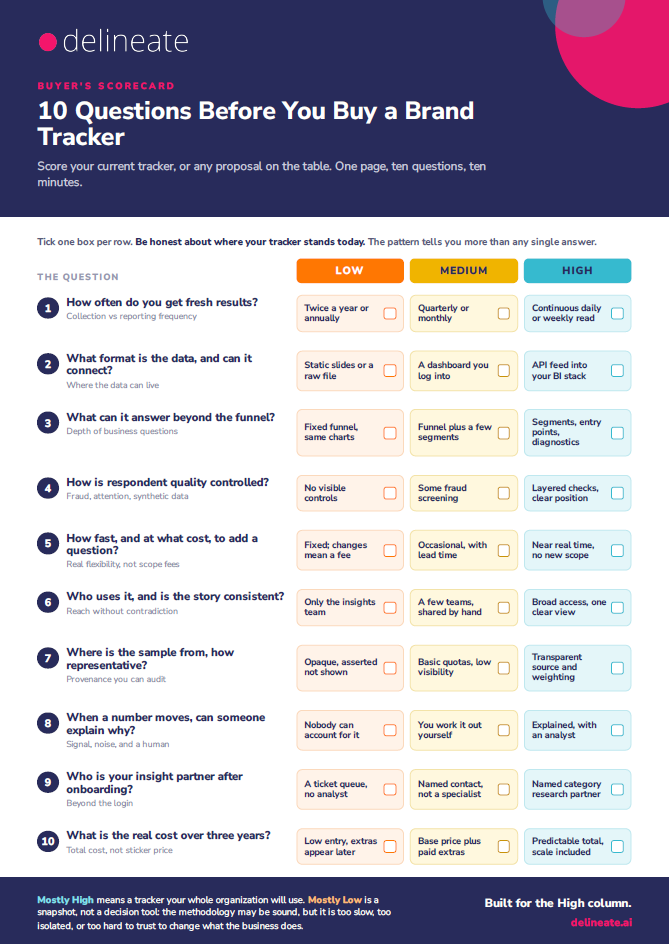
The ten questions below are built to surface those gaps before you commit. For each one you’ll find what to ask a prospective vendor, why it changes the outcome, and how to tell a low, medium, and high answer apart. Run your current tracker through them, or the proposal on your desk, and you’ll know within an afternoon whether you’re buying an asset or a subscription nobody opens. 

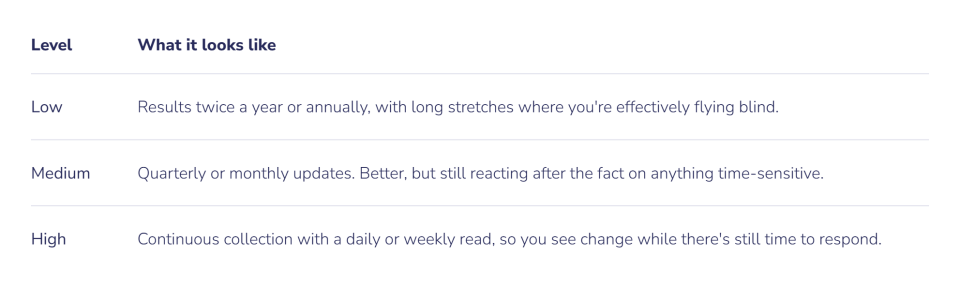
1. How often do you get fresh results, and is that fast enough to change a decision?


What to ask: How often is data collected, and how often does an updated read actually reach you? Collection frequency and reporting frequency aren’t the same thing, and vendors tend to quote the faster of the two. 

Why it matters: A tracker refreshed twice a year is a set of snapshots with long blind spots in between. Competitors launch, campaigns land or miss, and category dynamics shift inside those gaps, and you find out at the next wave once the moment has passed. Frequent collection also sharpens recall, because people describe events close to when they happened instead of reconstructing them weeks later. 

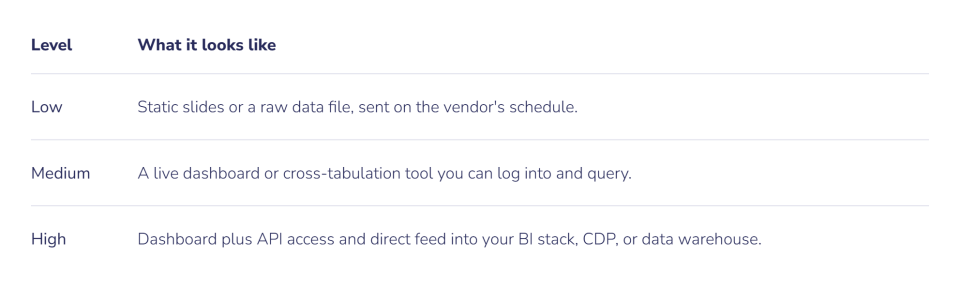
2. What format do you receive the data in, and can it connect to your other systems?


What to ask: How is the data delivered, and can it feed the dashboards, BI tools or data warehouse the rest of the business already runs on? 

Why it matters: When a tracker arrives as a static deck, only the people who open the deck ever see it, and that’s usually a handful on the insights team. Tracking gets far more valuable once the data sits next to sales, media and CRM data, because that’s where it can be interrogated rather than just read. If the only way in is a slide or a PDF, most of the value is stranded before anyone touches it. 

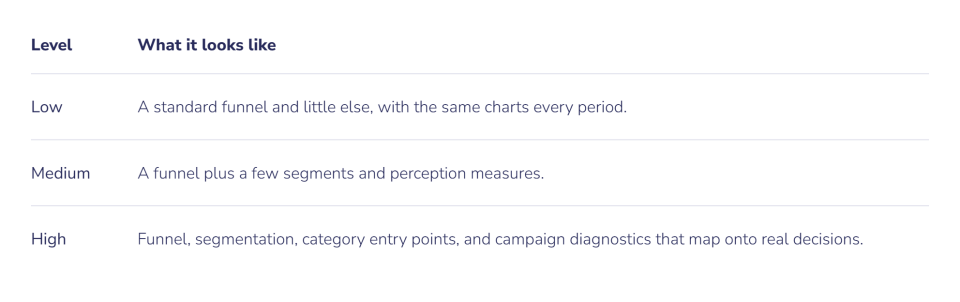
3. What business questions can it answer beyond the funnel?


What to ask: Past awareness and consideration, which decisions can this tracker actually inform? 

Why it matters: Every tracker reports a funnel. Far fewer can tell you which campaign drove brand lift, how a particular segment sees you against a named competitor, or which category entry points you’re winning and losing. The limitations show up the first time leadership asks something the standard template was never built to answer. A tracker stuck at funnel level keeps sending you off to commission separate studies for anything that carries weight. 

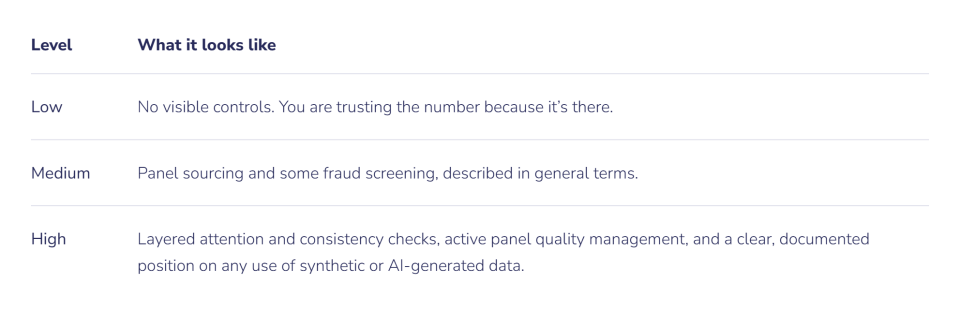
4. How is respondent quality controlled, and what is the vendor’s position on synthetic data?


What to ask: What controls ensure responses come from real, engaged people, and does the vendor have a documented position on synthetic and AI-generated responses? 

Why it matters: Poor respondent quality does not announce itself. It shows up as a clean-looking chart built on bots, professional survey takers, and people clicking through without reading. ESOMAR’s 2025 Global Prices Study points to panel fatigue, fraudulent and bot responses, and inattentive behavior from weak questionnaire design as major and escalating threats to data quality, and notes that measures like ISO standards and ESOMAR’s own quality initiatives have not fully resolved them.  

The question gets sharper as synthetic data enters the picture. The MRS 2025 industry report still treats synthetic data as an emerging, minority methodology, which is precisely why you should ask a vendor to state where and how they use it rather than assume every response is human. 

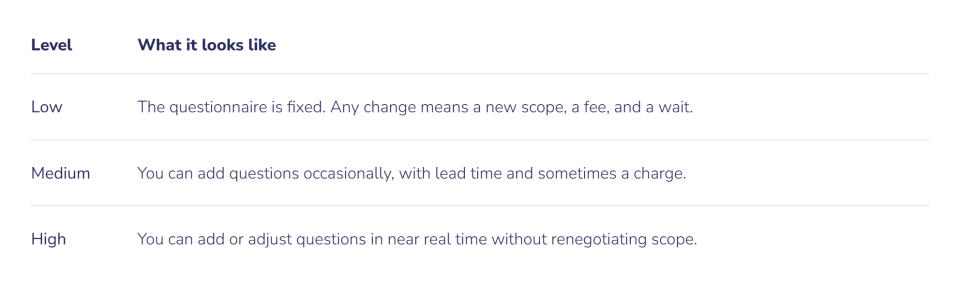
5. How quickly, and at what cost, can you add a question?


What to ask: When something happens in your category, how fast can you add a question, and what does each change cost? 

Why it matters: Markets move between waves. A pricing shift, a product recall, a new entrant, or a sudden turn in sentiment can each demand an answer the standard questionnaire was not designed to give.  

A tracker that lets you add a question this week keeps you current, while one that treats every change as a fresh project leaves you explaining to stakeholders why their question has to wait. Always ask about cost, because flexibility that comes with a scope negotiation and a fee every time is flexibility in name only. 


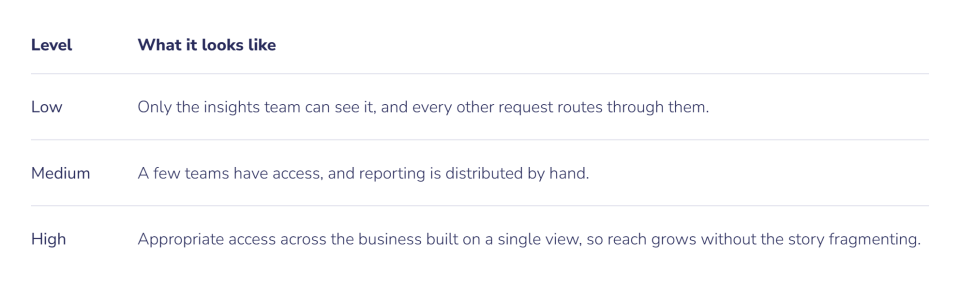
6. Who in the business actually uses it, and how do you keep the story consistent?


What to ask: Who has access today, and how do you widen that without teams pulling contradictory readings from the same data? 

Why it matters: A tracker provides ROI through use, and increases as use spreads when more people can reach the data. When marketing, category teams, agencies, and leadership all work from the same source, the investment compounds and the organization argues from one set of numbers. Wide access carries a risk though. Hand everyone a self-service cut with no shared framework and they will build competing narratives from identical data, which erodes trust faster than no access at all. What you want is broad reach around one consistent read. 

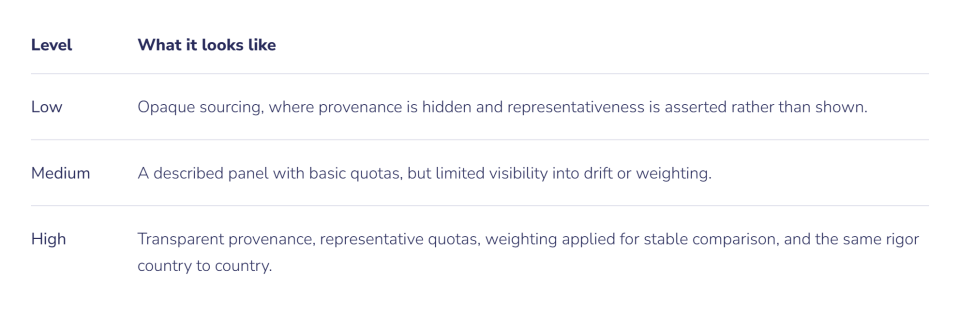
7. Where do respondents come from, and how representative are they?


What to ask: Can the vendor show you how the sample is sourced, how representative it is of your real buyers, and how they hold that steady over time and across markets? 

Why it matters: Numbers depend entirely on who was asked. A sample that skews, drifts over time, or comes from a source you cannot inspect will produce trend lines that look authoritative and mean very little.  

ESOMAR treats random probability sampling as the benchmark for representativeness and is candid that online panels carry built-in limits, since panelists self-select into research and anyone without reliable online access is left out. That does not make online panels unusable, and most modern tracking relies on them, but it does mean you should expect a clear account of provenance, quotas, and weighting rather than a bare assurance that the sample is representative. Consistency across markets counts just as much, because a global read is only as trustworthy as its least controlled country. 

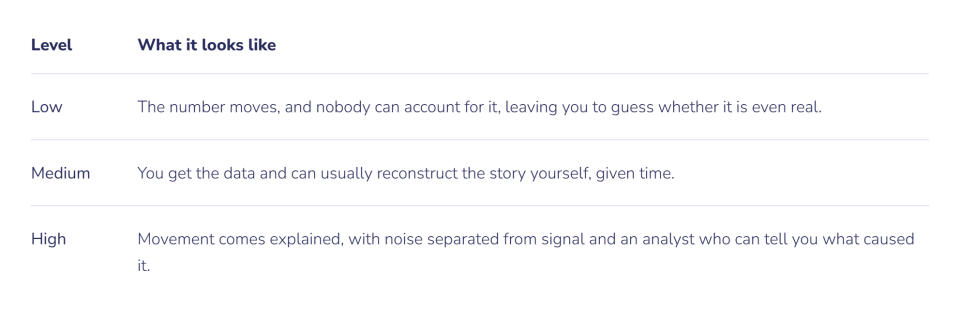
8. When a number moves, can someone tell you why?


What to ask: If a key metric shifts, can the vendor explain whether the move is real and what caused it, in a form that would hold up in a leadership meeting? 

Why it matters: This is the question buyers most often skip and later regret. A five-point drop with no explanation creates alarm rather than insight, and it puts you in front of leadership with a number and no story. What you want is a clean separation of genuine movement from sampling noise, plus a person who can tell you what changed and what to do about it. Before you sign, ask yourself which document you would reach for if your CMO challenged a result in front of the board. If the honest answer is that you would be working it out on the spot, that is the gap this question exposes.

9. Who is your insight partner once onboarding is over?


What to ask: After setup, who is on the other end of this, and do they understand your category? 

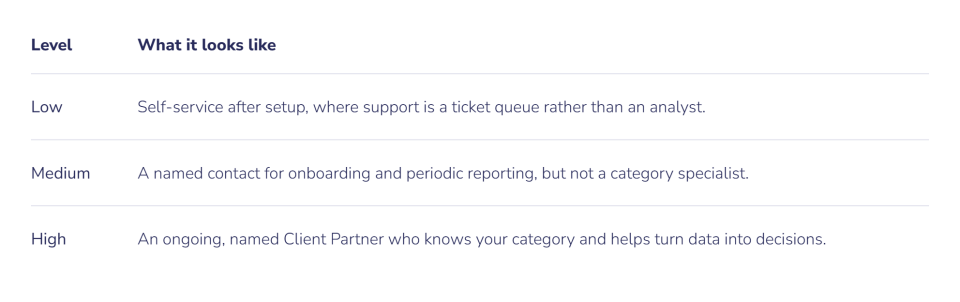
Why it matters: A dashboard does not interpret itself, and the person reading it with you often matters more than the interface. There is a wide gap between a login with a help desk behind it and a named analyst who knows your market and joins the conversation when a result needs interpreting. That gap tends to appear around the third month, once the onboarding attention fades and the harder questions start. Ask who that person is, how long they have worked in your category, and how often you will speak. 

10. What will it really cost over three years, and how does the price scale?


What to ask: What is the total cost across three years, and what happens to the price each time you add a market, an audience, or a custom question? 

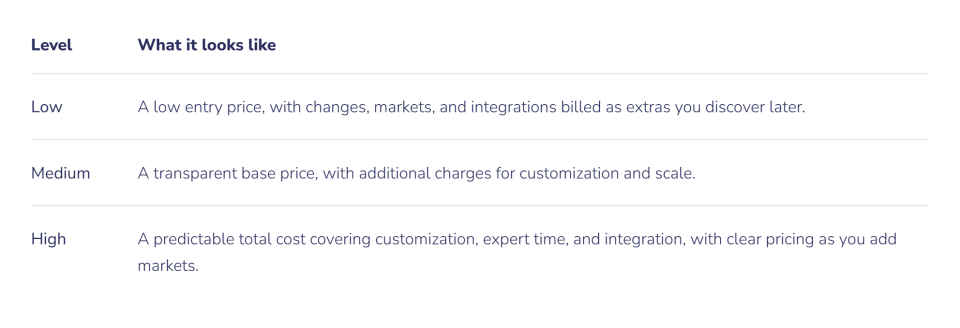
Why it matters: The headline figure is the least useful number in the room. Real cost is driven by everything behind it: scope fees for custom questions, the analyst time you pay for when the dashboard surfaces something worth chasing, the integrations you build because they are not included, and the step change when you add your ninth market.  

A tracker that is inexpensive to buy can be costly to run, and procurement often misses the difference. Price the setup you will operate, across the markets and questions you know are coming, not the entry configuration in the proposal. 

Score your tracker


Run your current solution against all ten. If the honest answers cluster at the low end, especially on frequency, access, and explanation, the problem is not the data itself. The tracker exists, and the methodology may be sound, but it is too slow, too isolated, or too hard to trust to change what the business does. 

The trackers worth paying for are not the ones with the longest metric list or the most polished dashboard. They are the ones an organization uses because the data is current, sits in the systems people already work in, and comes with someone who can explain it when it moves. Judge any solution on that before anything else. 

Delineate was built to this standard: always on collection, data that flows into the tools your teams already use, and a research team that knows your category and stays close to the numbers. If your current tracker does not clear the bar, that is worth a conversation with us. 


Join our Newsletter