Blog

Blog

What Does AI Efficiency Really Cost in Insights Talent?

AI will change the work of insights teams, but it may also change something less visible: how people learn to become good researchers. 

Much of the debate about AI in insights focuses on efficiency. Tools can summarize interviews, process survey data, surface themes, build charts and draft reports. For teams under pressure to deliver more with less, that’s a real gain: work that once took days moves faster, and people spend less time on repetitive tasks. 

But many of those repetitive tasks are also how junior researchers learn the craft. If AI removes that work without replacing the learning around it, the industry risks solving one problem while quietly creating another. 

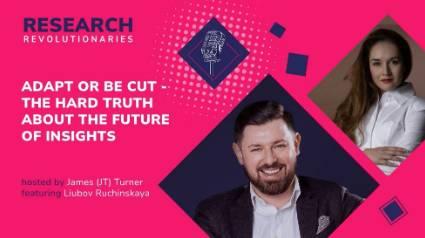
In episode 15 of Research Revolutionaries, Delineate founder and CEO James “JT” Turner spoke with Liubov Ruchinskaya, founder of Insights Lighthouse, about the future of the industry. Much of the conversation dealt with AI, the pressure on roles and the need for researchers to become more agile, commercial and influential. Underneath it sat a quieter question of how the industry develops the next generation of judgment. 

AI can accelerate the work. What it can’t do is give someone the experience of learning what good evidence looks like, why weak evidence is dangerous, and how research changes when it meets the realities of the business. 

You can watch or listen to the full podcast episode here:https://www.research-revolutionaries.com/adapt-or-be-cut-the-hard-truth-about-the-future-of-insights/ 
Adapt or Be Cut How Insights Teams Can Protect Their Relevance


How AI Quietly Changes How People Learn


It’s easy to see why companies want to automate parts of the process. Many teams are being asked to deliver faster on tighter budgets and fewer resources, and if AI takes on routine analysis, reporting and coordination, experienced researchers get more time for interpretation and decisions. 

The risk is assuming that because a task can be automated, it no longer has any learning or training value. For someone early in their career, the routine parts of research are often where professional judgment begins to form. 

Reviewing open-ended responses teaches people how messy human feedback really is. Checking survey logic shows how easily a badly worded question weakens the final answer. Building charts trains researchers to notice when a number looks surprising, inconsistent or too weak to carry the claim being made. Sitting in project meetings shows how a client’s questions shift as new information arrives. 

None of these tasks should be preserved simply because the industry is used to them. Many are slow, manual, and ready to be improved. But if they disappear, teams need to be deliberate about what replaces them. A junior researcher who only ever sees the finished, AI-assisted summary may never learn how the evidence was built: what was excluded, what was uncertain, or where the analysis could have gone wrong. 

Senior judgment does not arrive suddenly after a few years in the job. It is built through repeated exposure to decisions, mistakes, trade-offs and the discipline of asking whether the evidence really supports the conclusion. 

The Skills in Demand Are Changing


The kind of experience juniors need is shifting too. Liubov described the people now in demand as those who can “think, take risks, make bold decisions, be resilient during stressful change, move forward quickly, learn fast and fail fast.” 

That’s a demanding list for a profession built around caution, validation and careful interpretation. Research still depends on rigor, but the environment around it has changed. Businesses move faster, AI is reshaping expectations, and leaders often want a recommendation before every question can be answered perfectly. 

This doesn’t mean researchers should become careless or overconfident. The industry’s value still rests on credible evidence and sound judgment. It does mean becoming more comfortable working with uncertainty and being able to explain that uncertainty clearly without making the recommendation unusable. 

The skills that matter now aren’t only technical. Researchers need to understand the business context behind a question, judge when evidence is strong enough to support action and when it is too weak to trust, and work across different parts of the business. A finding can mean one thing to marketing, another to finance and something different again to the leadership team deciding where to invest. The job is not only to present the data, but to help each of those teams understand what it means for the decision in front of them. 

That takes confidence, and it also takes humility. Enough curiosity to keep learning, and enough care to know when the data does not support the story people want to tell. 

Experience Still Matters


AI can make inexperienced people look more capable than they are. A well-written summary, a clean chart or a confident recommendation can create the impression that the work behind it is stronger than it really is. 

That was one of Liubov’s concerns. Weak data or poor statistical practice, especially in the hands of people without the experience to judge it, can lead to the wrong recommendation, and over time that erodes trust in the function itself.  

“My biggest fear is that we will lose relevance as an industry,” she said. 

Experienced researchers know that not all data deserves the same confidence. They know a strong-looking number can come from a weak sample, that a recurring theme may not be representative, and that a clear answer can still be answering the wrong question. They also know how easily research gets misused inside a business: taken out of context, used to defend a decision already made, or stretched past what the evidence supports. Technology can help find patterns, but it can’t be accountable for how those patterns are used. That accountability still sits with people. 

Which is exactly why the talent pipeline matters. If AI removes the early stages where judgment is formed without creating new ones, the industry ends up with faster outputs and a thinner base of people able to tell a sound recommendation from a convincing one. 

Can We Afford to Leave Talent Development to Chance?


Liubov’s wider message was that the industry needs to take an active role in shaping what comes next. “The revolution will happen,” she said. “Either we participate and take a leadership role, or we do not.” That applies to talent as much as to technology. 

If every company meets the pressure by cutting junior roles, outsourcing development or leaning too heavily on AI-assisted output, the effect is felt across the whole industry. Agencies find it harder to build the next generation of senior consultants. Client-side teams struggle to hire people who can combine technical knowledge with commercial judgment. And the gap between what businesses need and what the market can offer grows wider. Liubov pointed to recruiters reporting that demand and supply no longer match the way the industry needs them to, a sign that the skills companies want are changing faster than most career paths have adapted. 

The answer is not to protect old roles exactly as they were. Some tasks should be automated, some processes should be faster, and some early-career work was never the best use of anyone’s time. But the learning still has to happen somewhere. 

That means being deliberate about how junior researchers gain exposure to good research design, data quality, interpretation, client conversations and decision-making. It might mean bringing them into senior discussions earlier, using AI outputs as teaching material, building more structured review, or giving them clearer ownership of the reasoning behind a recommendation. The point is that development becomes intentional, rather than left to whatever tasks AI has not yet absorbed. 


The Future Needs Technology and Apprenticeship


The future of insights will not be built by choosing between AI and people. It will depend on how well the industry uses the technology while still developing the judgment that makes research credible. 

Used well, AI can even improve how people learn, giving them more examples to interrogate, more patterns to test and more time to spend on interpretation. But that only holds if teams stay clear about what the tools are doing and what people still need to understand. A junior researcher should not simply accept an AI-generated summary. They should learn to question it. 

  • What evidence supports this conclusion? 
  • What might be missing?  
  • Is the recommendation stronger than the data allows?  
  • What would change if the business acted on it? 

That is the training this moment calls for. The insights professional of the next few years will need to move faster without becoming less careful, work with AI without hiding behind it, and make recommendations with enough confidence to be useful and enough discipline to stay credible. 

Liubov’s closing advice was to stay humble, curious, agile and positive. It is a fair summary of what the pipeline now needs to produce: people who can learn quickly, adapt to new tools and still ask the questions that protect the quality of the evidence. People who understand that speed is only useful when the answer can be trusted. 

AI will change how insights work gets done. The bigger question is whether the industry will still give people enough room to learn how to do it well. 

You can watch or listen to the full podcast episode here:https://www.research-revolutionaries.com/adapt-or-be-cut-the-hard-truth-about-the-future-of-insights/ 

Join our Newsletter