Opens in a new tab

Blog

Blog

How Consumer Behavior Is Changing in Alcoholic Drinks

What Global Drinks Brands Need to Track Next 

The big shifts in alcoholic drinks aren’t difficult to spot. Moderation is changing shape, premium is getting more selective, and RTDs keep gaining ground. What’s harder to see is where those shifts are already costing a brand its place in the occasions that matter, before it shows up in the sales numbers. 

Alcohol consumption has been under pressure for a few years, and there’s been no shortage of theories about why. The one about younger drinkers is probably the best example of how quickly those theories can date. 

The alcohol industry spent the better part of a decade convinced that Gen Z was going to abstain its way out of the category. A whole small economy of panels, think-pieces and Gen-Z-does-not-drink commentary grew up around the idea, and it was wrong. IWSR data puts alcohol participation among legal-drinking-age Gen Z at around 74%, compared with 76% of adults overall, and up from 66% three years ago. IWSR’s own verdict is that the “generation of moderation” narrative has been debunked. 

But higher Gen Z participation hasn’t meant more drinking overall. Across all drinkers, the average is now 3.9 drinks per occasion, down from 4.4 in both 2024 and 2025. The range of drinks people reach for has narrowed too: among Gen Z, the average number of categories consumed in a single occasion fell from 2.8 to 1.8 in two years. 

So, the more interesting shift isn’t in how many people drink. It’s in what happens when they do. A broad trend report can tell you moderation is up and RTDs are growing. It can’t tell you whether the occasion your brand used to own is the one getting trimmed, or whether you’re still on a shrinking shortlist. 

Category health and brand health can come apart. The category can look perfectly steady while your brand quietly loses a key occasion to an RTD or another format, and periodic tracking may only reveal that once the shift is established. 
Sober-ish, not sober


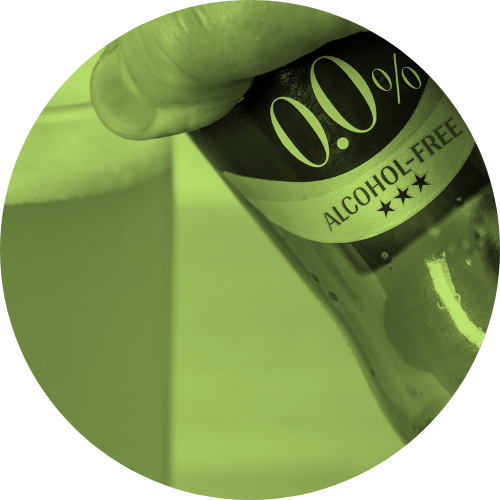
The moderation story needs the same correction the Gen Z story just got. “Sober curious” is a useful phrase and a real behavior, but the weight sits on curious. For many people, moderation is less about giving up alcohol altogether and more about changing how and when they drink. 

Monthlong abstinence, the thing Dry January turned into a movement, is actually falling in several markets. IWSR found that the share of UK Gen Z drinkers who reported going a month or more without alcohol fell from 33% to 24% between autumn 2024 and autumn 2025, and from 39% to 24% in Australia. 

Flexible moderation shows up instead in the growth of no- and low-alcohol. No-alcohol volumes were expected to grow around 9% in 2025 and are forecast to expand by roughly a third between 2024 and 2029, to more than 18 billion servings. Around 93% of global no-alcohol volume is beer, which matters because a no-alcohol boom looks very different depending on the category a brand competes in. The US has also brought a lot of new people into the category, with 37 million new no-alcohol consumers between 2022 and 2024. Many are younger, and they’re buying more often than the existing base. 

Then there’s a second shift going after the same glass. Alcohol-adjacent drinks, the functional and botanical products that aren’t trying to pass as beer, wine or spirits, grew an estimated 11% in 2025. And while they may end up in the same part of a report, people are choosing them for different reasons. People reach for no-alcohol beer, wine or spirits mostly for health and moderation, while they reach for adjacents out of curiosity, or for a specific effect. Treat them as one “non-alc” trend and you miss an important difference.  

Take two drinkers who are both cutting back. One swaps a Friday beer for the no-alcohol version of the same beer and stays loyal to the brand and the occasion. The other drops the drink entirely for a botanical soda. In the category numbers they look the same: one more drop in alcohol consumption. For the brand, they couldn’t be more different.  

The first drinker is a case for making sure the brand’s no-alcohol option is there wherever that occasion happens. The second is a case for defending the occasion itself, because the brand hasn’t just lost a serve. It’s lost Friday night. If your data can’t tell those two drinkers apart, it can’t tell you which problem you have. 

Premium still matters, but not everywhere


Premiumization has held up better than topline volume, but it’s become much more selective. Affordability pressure is still shaping decisions, particularly among middle-income consumers, and people are making sharper choices about where they’re willing to spend more. The same person might trade up for the bottle that anchors a celebration and become much more price-conscious about the midweek purchase. 

Premiumization has held up better than topline volume, but it has become much more selective. Affordability pressure is still shaping decisions, particularly among middle-income consumers, and the same person might trade up for the bottle that anchors a celebration and become much more price-conscious about the midweek purchase. IWSR calls this selective premiumization. People haven’t stopped trading up, but they want a clearer reason to. 

That creates a measurement problem. Ask someone whether quality matters and the answer may be yes. Put a real price in front of them, for a particular occasion and next to the alternatives, and the decision gets more complicated. A brand’s overall premium score can look stable while celebration spending holds and everyday spending slips, because the two movements cancel each other out in the average. 

For pricing and pack decisions, the split matters. A single price move across the board can damage the occasion that’s still working while trying to fix the one that isn’t. The everyday purchase may need its own answer, such as a smaller format, while the occasion that justifies premium is protected. 

Selectivity isn’t only showing up in what people spend. It’s also showing up in what makes the shortlist. 


RTDs and the shrinking shortlist


RTDs are still one of the fastest-moving parts of the category, with flavor and convenience among the main reasons people choose them. In the US, NIQ puts RTDs and ready-to-serve products at more than 12% of off-premise alcohol dollar sales, although growth is starting to cool. 

The format matters beyond its share of sales because it changes what brands compete against. A canned cocktail can go up against a spirit and mixer, a beer, another RTD or something outside alcohol altogether, depending on the occasion. Consumers don’t know or care which internal category owns the P&L. 

There’s also an interesting signal in the Gen Z numbers that’s easy to miss. Their range per occasion is narrowing, yet at 84% they’re still the generation most likely to have had a cocktail in the past six months. The interest is there. The shortlist is just shorter, which makes being on it matter more. 

If people are choosing from fewer categories and sticking more often with what they know, brands need to understand whether they’re still in that consideration set and, if not, what has taken their place. 

Knowing that “RTD consideration is up” only tells you so much. What did the RTD replace? Did it bring the brand into a new occasion, or take one from elsewhere in its own portfolio? Did it strengthen the wider brand, or was the choice mainly about the format? 

The practical step for brand teams is to benchmark against the occasion, not just the category. If a brand is only ever compared with its own category, whatever is actually taking its place may never show up in the report. 

A global average can hide a local problem


Across markets, the picture gets more complicated. Moderation may be driven by health in one market and affordability in another. An RTD can bring new people into a brand in one country and mainly replace an existing choice in the next. 

Diageo’s new strategy offers a useful example: premiumization stays, but the company will also compete across the full price and format ladder in spirits, including RTDs, to reach more consumers on more occasions. The direction makes sense, but it complicates tracking. When brands, formats and price points perform differently by occasion and market, one global measure of premium or value can hide what’s actually driving the change. 

The answer isn’t to standardize everything, which buries the local reasons, or to let every market invent its own definitions of awareness, consideration, occasion and value, which makes nothing comparable. A global tracker earns its keep by holding a stable core of comparable measures and a consistent methodology, with enough flexibility for local teams to look at the occasions, behaviors and competitors that matter in their market. 

Leadership can then see whether a shift is genuinely global, concentrated in a few markets, or different behaviors producing the same headline number. That distinction decides where the money goes: a local shift needs a local response, and treating it as global means spending against a problem most markets don’t have. 

Five questions to ask of your tracker


Put together, these shifts give every drinks brand a simple test for its tracking. Can it tell you which occasions your brand is winning and losing, and to what? When people cut back, can it separate a switch to your own no-alcohol option from a switch out of the brand? Can it show where premium is holding, occasion by occasion, rather than as one average? When a new format brings people in, can it tell you whether they came back and whether the wider brand gained? And can it tell a global shift from a few markets moving at once? 

If the honest answer to most of these is no, the tracker is measuring the category, not the brand. None of this means giving up established KPIs or years of trend data. It means being able to look further underneath them. 

From trend to action


The further you go beneath the topline, the more the speed, quality and depth of the data matter. It’s one thing to know that something has moved and another to understand where it moved, for which audience or occasion, while there’s still time to act on it. 

Delineate collects data continuously rather than in periodic waves, with Delineate Proximity® sampling designed to support those deeper cuts. The data is available daily and can connect to the systems teams already use, giving teams a current view of where movement is happening and what may be driving it. 

That model is already working at global scale. The Coca-Cola Company uses Delineate for always-on measurement across 40 markets, with one consistent framework for the global team and enough flexibility to look at individual markets and campaigns in context. 

Most global brands already know the big trends shaping the market. The harder part is seeing what those trends are doing to their own brands, occasions and markets. Occasions are rarely lost all at once. They slip away one swap at a time, and by the time the sales numbers show it, the shift is already established.


Want to see what always-on tracking could tell you about your brands, occasion by occasion and market by market? Let’s talk. 

Join our Newsletter